Real Talk: Running a Profitable Floral Business in 2026
- March 26, 2026
- 5 minutes read
The floral industry is in a period of real pressure. Tariffs are hitting supply costs. Consumer spending is tightening. And florists are being asked to do more, adapt faster, and protect margins that were already thin.
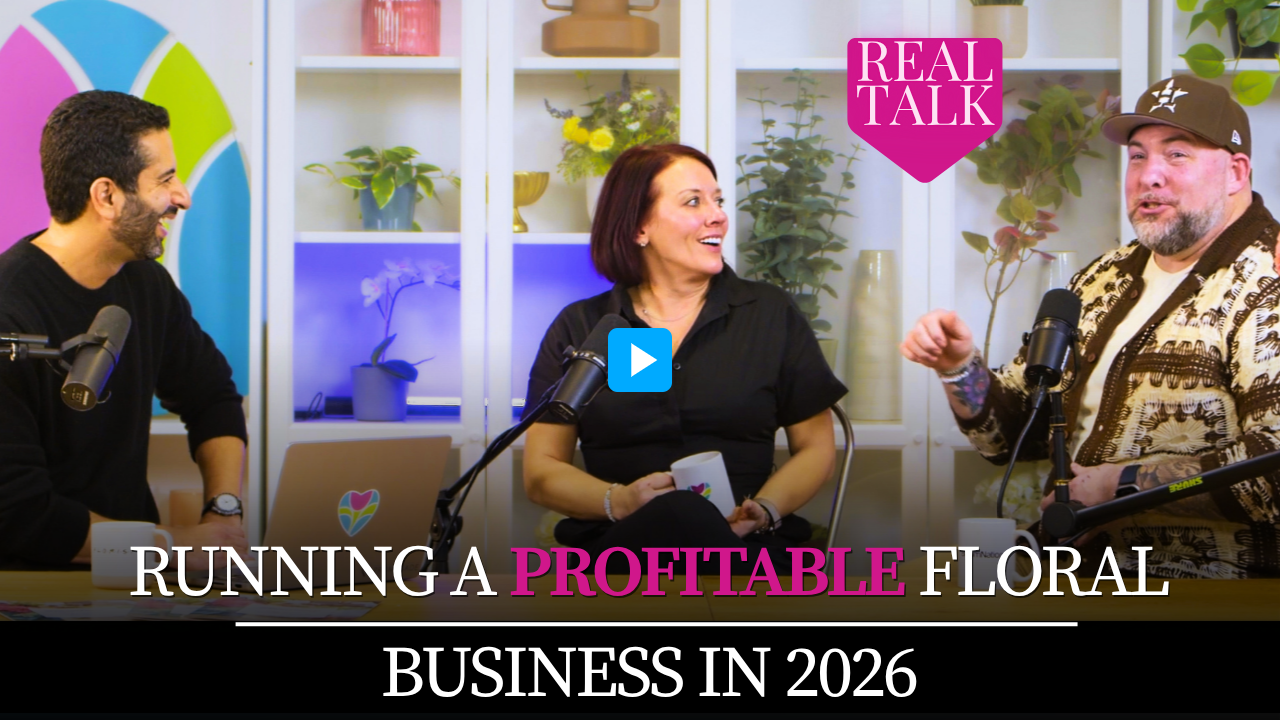
We recently sat down with two of the most respected voices in the industry, Ace Berry of Fulshear Floral Design and Pennylyn Woosley of Blossom & Bee Floral in New York, for an honest conversation about what it takes to run a profitable, sustainable floral business right now.
You can watch the full interview here:
Here are the most important takeaways.
The Industry Is in a Valley – Prepare for What Comes Next
The floral industry has been through a whirlwind in recent years. COVID sent flower purchasing skyrocketing. The post-pandemic correction brought operational constraints. Now tariffs are adding another layer of cost pressure. The florists who survive these cycles are the ones who stay adaptable and keep their eyes on what’s coming, not just what’s happening right now.
As Ace put it simply: “adapt or die”. That means regularly reassessing your model, your pricing, your product mix, and your customer relationships, rather than waiting for a crisis to force your hand.
Know Your Numbers or Someone Else Will
Penny, who came to floristry with an accounting background, was direct about where most floral businesses bleed money: untracked costs.
Every element of every arrangement carries a cost: focal flowers, filler, greenery, foam, vessels, ribbon, and labor. When designers add product on instinct rather than recipe, those costs accumulate invisibly until they’ve quietly erased your margins.
Build a recipe for your core products. Price from real numbers, not feelings. And don’t treat greenery as free. Italian ruscus runs $11 to $12 a bunch for five stems. Across a week of orders, that adds up fast.
The discipline of tracking every element isn’t glamorous, but it’s the foundation of a profitable shop.
On Tariffs: Be Transparent, Not Silent
New tariffs on floral imports are now in effect, affecting cut flowers from major sourcing countries as well as hard goods like foam, ribbon, and vases. Costs are rising, and florists are faced with a choice: absorb them or pass them on.
Both Ace and Penny were clear: absorbing rising costs to avoid an uncomfortable conversation is not a sustainable strategy.
Penny’s approach when tariffs hit her wedding clients mid-contract was straightforward. She told them what was happening, gave them options, and let them decide. Most appreciated the honesty. Many were willing to adjust. The transparency built trust rather than eroding it.
Customers are not unaware of what’s happening in the world. Inflation and tariffs are widely understood. You don’t need to over-explain. You need the confidence to have the conversation.
Brand Identity Is the Difference Between Shops That Last and Shops That Close
When asked what separates thriving florists from those who shut their doors, Ace’s answer was immediate: “brand identity”.
The florists who struggle most are the ones who never clearly defined who they are, what they sell, and who they’re selling it to. Without that clarity, every decision becomes harder and every trend becomes a temptation to chase.
The strongest floral brands are built on a clear point of view and the discipline to stay consistent. That doesn’t mean ignoring trends or refusing to evolve. It means adapting intentionally, incorporating what’s new in a way that still feels unmistakably like you.
Ace built two distinct brands serving two distinct audiences, each with its own aesthetic and identity. He didn’t let customers dictate his creative direction. He led it, and brought his customers along.
Stop Saying No. Start Finding the Yes.
One of the sharpest pieces of advice from the conversation was about how florists respond when a customer asks for something outside their comfort zone.
Saying no outright is the fastest way to lose a customer to the shop down the street. But there’s almost always a way to redirect without refusing. Offer an alternative. Suggest something better. Show them what’s possible.
The same applies to design instincts. The word “can’t” has no place in a florist’s vocabulary. If you don’t know how to do something, learn it. If a style doesn’t suit your shop, find a way to reframe it. Customers respond to florists who lead with confidence and creativity, not limitation.
Protect Margins Without Sacrificing Trust
One of the most practical strategies from the conversation was about using older stock transparently rather than secretly. When you have product that’s a few days into its vase life, tell the customer. Let them know the arrangement may last five to seven days rather than seven to ten. Offer a better price or an enhanced arrangement in return.
More often than not, customers respond with appreciation. It sets the right expectation, prevents complaints, and builds the kind of trust that turns a one-time buyer into a repeat customer.
Transparency, applied consistently across pricing, product, and communication, is one of the most underrated tools a florist has for building a loyal, profitable customer base.
Bet on Yourself
The conversation ended with both Ace and Penny sharing the same core message, just in their own words.
Ace:
Gamble on yourself. Put all your chips on you. Your mind will not let you fail because it's going to make you work ten times harder.
Penny:
Streamline everything. Figure out what's making sense, eliminate the noise, and get uncomfortable, because that's where growth lives.
In an unpredictable market, the most reliable investment you can make is in your own clarity, discipline, and conviction. Know your brand. Know your numbers. Know your worth. And don’t stop moving forward.