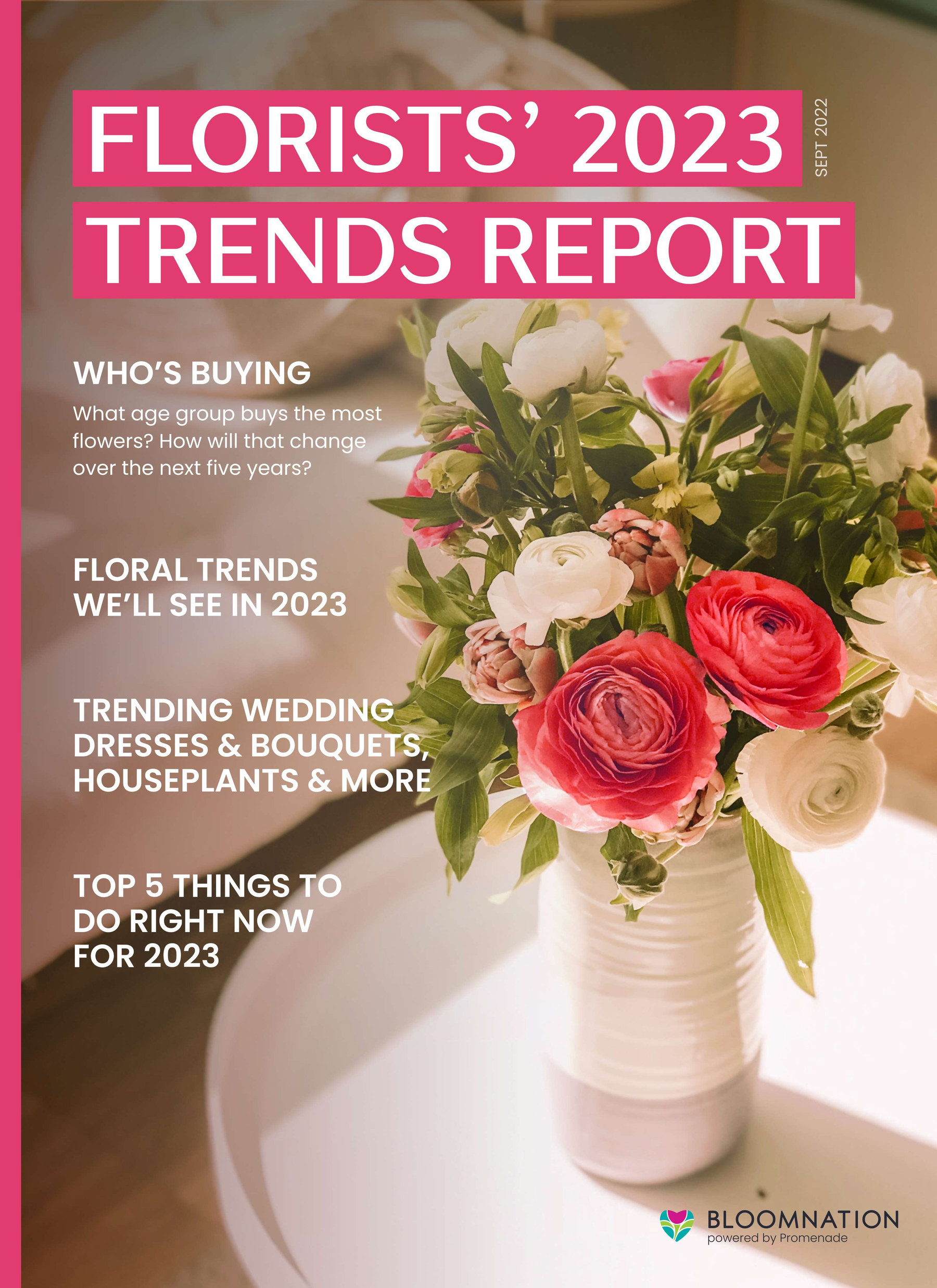
The floral trends for 2023 are Ode to Nature, Vintage Folklore, Layered Spaces and Collecting Memories. Expect living and dried materials side by side, bright 1970s color mixes, layered arrangements built on contrast, and soft, well-spaced designs in nostalgic vases.
The Florists’ 2023 Trends Report from BloomNation pairs these design trends with wedding, buyer, competition and houseplant data, so you can plan your shop’s year with real numbers in hand.
Here are all four floral trends for 2023 in full, with the color palettes shown in the report.
Floral trends 2023: the four looks to know
Ode to Nature
Designs combine living and dried materials, and flowers and plants are used in a quirky, natural way. Vases and pots have organic, irregular shapes.
Vintage Folklore
Colorful bouquets and arrangements with a vivid look, inspired by the 1970s and folklore. Repurposed items used as vases add to the quirkiness.
Layered Spaces
Heavily staggered arrangements have layered structures. Floral material, vases and pots are used in contrast with one another, and foliage is used in a totally new way to create a layered picture.
Collecting Memories
Well-spaced arrangements let each flower be visible and expressive, often in nostalgic vases such as a pitcher or teapot. Erratically shaped plants, pots and older plants give this trend a unique look.
The color palettes behind each 2023 trend
Ode to Nature colors
White, beige, yellow, pink and lilac are used mainly for flowers and flowering plants. Browns and greens matter most for accessories, plants and pots.
- Beige
- Brown
- Olive green
- Deep green
- Soft yellow
- Pink
- Lilac
Vintage Folklore colors
Cheerful, diverse colors that reflect the 1970s and folklore. At first sight they don’t quite seem to match: expect bright shades and pastels next to darker colors.
- Leaf green
- Pastel pink
- Mustard
- Orange
- Mint
- Bright blue
- Dark teal
Layered Spaces colors
This trend is built on contrast: light and dark, warm and cool, bright and pastel. Used in the right contrasts, these colors can give bouquets, and even entire rooms, a greater sense of space.
- Red-orange
- Dusty pink
- Pale blue
- Periwinkle
- Pale yellow
- Green
- Slate blue
Collecting Memories colors
Soft, harmonious colors with a notable amount of green, from pale bluish-green to dark greens, plus white, lavender and pink tones. The flowers are delicate and poetic.
- Pale bluish-green
- Dark sage
- Olive
- Silver gray
- Lavender
- Soft pink
- Peach
Colors sampled from the trend palettes in the report.
Tip: For Vintage Folklore, look beyond your usual vases. The report notes that repurposed items used as vases bring out the quirkiness of this trend.
What’s inside the Florists’ 2023 Trends Report
The 26-page report, published in September 2022, covers:
- The four 2023 floral trends and their colors
- Trending wedding dresses and the bouquets that suit them
- Key growth factors and annual growth trends for florists
- An industry revenue forecast, including ecommerce sales
- Who buys from florists, by age group
- Internal and external competition
- Technology trends for flower shops
- The rise of houseplants and the best-selling house plants
- The top 5 things to do for 2023
Questions florists ask about 2023 floral trends
What are the floral trends for 2023?
There are four: Ode to Nature, Vintage Folklore, Layered Spaces and Collecting Memories. They range from natural, dried-and-living designs to bold 1970s color and soft, nostalgic arrangements.
What flower colors are trending in 2023?
It depends on the trend. Ode to Nature pairs white, beige, yellow, pink and lilac flowers with browns and greens. Vintage Folklore puts bright shades and pastels next to darker colors, and Collecting Memories leans on soft greens with white, lavender and pink.
Are dried flowers still on trend for 2023?
Yes. The Ode to Nature trend combines living and dried materials, set in vases and pots with organic, irregular shapes.
What wedding bouquet trends does the report cover?
The wedding section looks at the bridal dress trends featured in Florists’ Review in April 2022 and suggests a bouquet approach for each style.
The florist industry outlook through 2027
$6.0bnin US florist industry revenue
-1.1%projected annual revenue growth, 2022 to 2027
35,442florist businesses, forecast to shrink 0.4% a year
20%-30%revenue growth for BloomNation florists over the last five years
Sources: IBISWorld, 2022; BloomNation Data, 2022
Revenue is forecast to slip as large online retailers bypass florists and buy from flower farms and bouquet factories. But online floral sales are expected to keep rising every year of the forecast.
The report explains how shops can capture those online sales. It also notes BloomNation partners’ growth may partly reflect the social media and email marketing BloomNation provides.
Who buys flowers from florists
Consumers aged 55 to 64 are your biggest customers, at 28.1% of revenue. People aged 40 to 64 together account for 49.9% of revenue in 2022, while consumers under 30 make up just 5.9%.
Your biggest fans are online, too: among people aged 55 to 64, 73% are on Facebook, 38% on Pinterest and 29% on Instagram (Pew Research Center, 2021).
Wedding dress trends and the bouquets to match
Each bridal look comes with a floral design tip and a real bouquet, from florists including Cassandra Shaw Flowers & Event Design (Red Bank, N.J.) and Fezz & Hazel (Columbus).
- Pearl details: add pearl accessories to bouquets and wearables, or a pearl-luster, satin or matte finish to selected blooms and foliage.
- Corset bodices: design bouquets that don’t cover or compete with the bodice, or that are carried low or to the side.
- Reception, elopement and civil ceremony dresses: more brides are choosing two dresses, with short reception hemlines in contrast to the ceremony gown.
- Minimal gowns: the ideal backdrop for bouquets that are either full of detail and texture or as simple and chic as the dress.
Sometimes less really is more.
Jen Campbell, Green Wedding Shoes
How florists are expected to compete
Supermarket floral sales will remain stable at the expense of local florists. At one bouquet maker, a conveyor-belt team can assemble 32 bouquets every minute and a half, or 8,000 to 9,000 cases a day. Florists with an active online presence are expected to compete better over the next five years.
Technology trends for flower shops
POS systems, delivery tracking, route optimization, third-party delivery and online platforms, including why third-party drivers can carry only a limited range of arrangements.
Houseplants: a growing opportunity
BloomNation reports a 36% increase in houseplant sales over the last two years. Floral Marketing Fund data shows houseplant owners have more plants, will pay much more for every type of plant and are more likely to gift one. In 2021, buyers spent $81.90 to $111.90 per plant category.
The top 5 things to do for 2023
- Get your website working. Get your own ecommerce website or optimize the one you have, starting with local SEO and a complete Google Business Profile.
- Grow on social media. Focus on Facebook, Instagram and Pinterest, and share photos or videos of special arrangements being made.
- Boost posts and run ads. A budget of $100 a month can significantly improve your reach and engagement.
- Use email marketing. Increase sales around holidays and stay top of mind.
- Keep customer details in your POS. Birthdays and favorite flowers help you give loyal customers white glove service.
What else is inside
- A year-by-year revenue and ecommerce sales forecast from 2017 to 2028
- A florist quiz to rate your competitive edge
- Charts on the occasions people give houseplants for
- Eight best-selling house plants
- How florists are expected to respond to big box and online retailers
- Full references and methodology
Read the full report
Tell us where to send it. The report opens right here as soon as you submit.